

Case Study
Ghost AI - Software Case Study
Empowering a complex carbon-management platform with scalable
testing to ensure accuracy, reliability, and seamless performance.
Overview
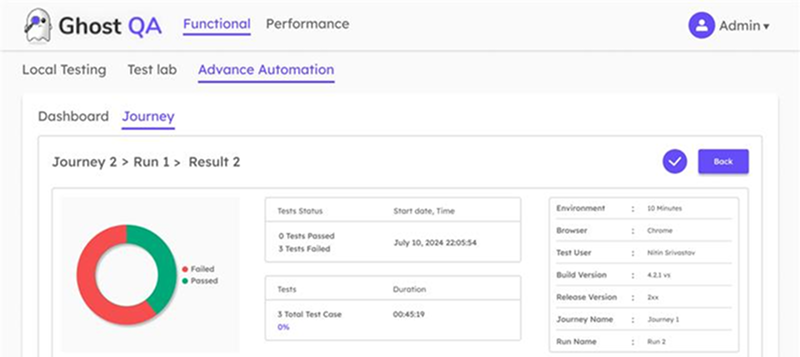
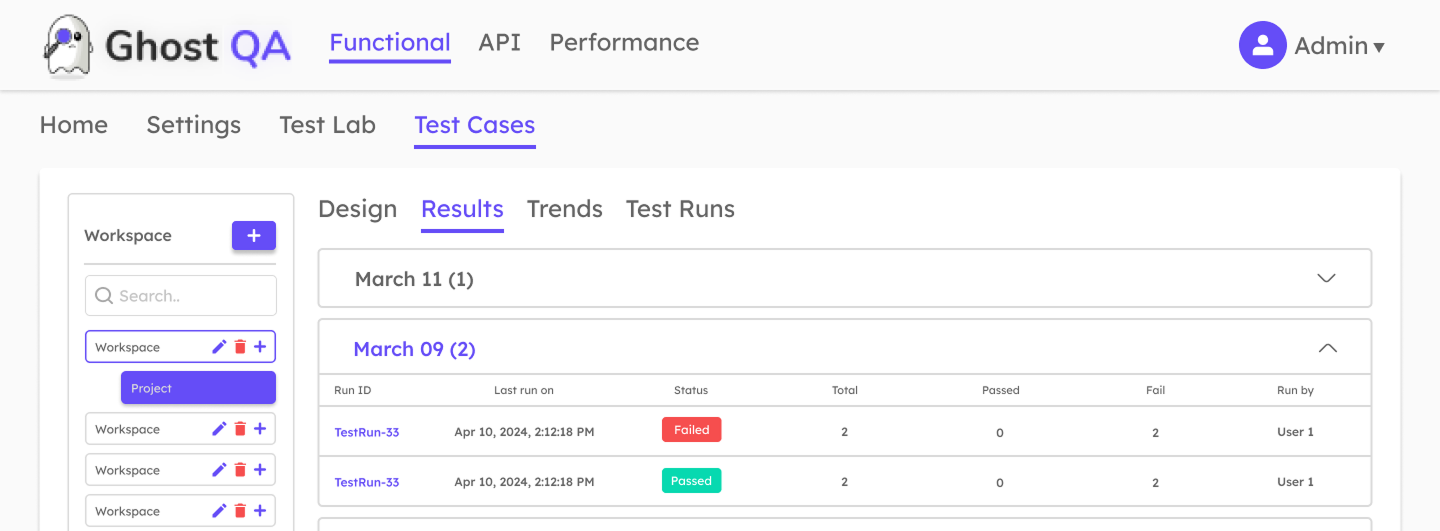
GhostQA is a no-code AI-powered codeless test automation platform featuring tools like GhostLab for low-code automation, GhostAI for zero-setup regression testing, and GhostPerf for performance testing. Built to streamline QA workflows, it offers integrations with CI/CD, collaboration tools, and auto-healing capabilities for flaky tests.
We elevated GhostQA by developing an AI-powered agentic assistant—a smart automation assistant that can autonomously interpret user prompts, initiate tests, analyze results, and provide recommendations.
Challenges
Users had to manually configure and trigger tests despite the no-code environment.
Lack of conversational, intelligent guidance during test setup and investigation.
Scaling testing workflows across teams required more proactive automation support.
What We Did
To address these challenges, Mechlin Technologies designed and implemented an AI-driven agentic layer on top of the GhostQA platform. The goal was to move beyond traditional no-code automation by introducing a conversational, intelligent assistant that could understand user intent, orchestrate complex testing workflows, and proactively guide users through execution and analysis. By combining natural language interaction, workflow automation, and human-in-the-loop safeguards, we transformed GhostQA into a more intuitive, scalable, and assistant-led QA experience.
Built an AI Agent Interface: Using ChatGPT to interpret natural-language instructions like “Run UI regression tests and report failures.”
Integrated with N8N Workflows: Platformed task orchestration to execute tests (GhostLab, GhostAI, GhostPerf) based on agent commands.
Created Adaptive Response Logic: The agent assesses test outcomes and autonomously suggests next steps—reruns, debugging guidance, or performance tuning tips.
HITL Controls: Users can review AI-suggested actions before execution to maintain control.
UI Overlay: Developed a conversational chatpane overlay in GhostQA where users interact with the agent seamlessly.
Tech Stack
To support this agent-driven architecture, Mechlin Technologies carefully selected a modern, scalable technology stack capable of handling real-time interactions, workflow orchestration, and seamless platform integration. The stack was designed to ensure reliability, extensibility, and smooth communication between the AI layer, automation engines, and the GhostQA user interface—while remaining flexible enough to evolve with future testing and AI capabilities.
AI Backbone: OpenAI’s ChatGPT for NLP-based command interpretation.
Orchestration Engine: N8N for defining, managing, and sequencing workflows.
Automation Tooling: GhostQA modules (GhostLab, GhostAI, GhostPerf) for execution.
Backend Logic: Node.js & TypeScript for agent orchestration and orchestrating QA tasks.
Frontend Plugin: React + Tailwind CSS for the chat overlay integrated inside GhostQA UI.
Reporting & Notifications: Slack and email integrations for test result summaries and alerts.
Highlights
The introduction of the AI agent significantly changed how users interacted with GhostQA on a day-to-day basis. Instead of navigating complex configurations and fragmented workflows, teams gained an intelligent, conversational layer that simplified decision-making, reduced friction, and accelerated test execution. These improvements translated into measurable gains in usability, efficiency, and overall QA confidence across teams.
Conversational QA Management: Users can ask the system to run suites, check health, or debug failures in plain English.
Auto-Suggested Improvements: The agent flags unstable tests, suggests edits to selectors, or recommends performance optimizations.
Streamlined Workflow: Complex QA processes feel as easy as having a chat with an expert assistant.
Human Oversight: HITL ensures AI-recommended actions are fully visible before execution.
Impact
Test maintenance effort decreased significantly due to self-healing automation.
Regression testing moved from manual execution to fully automated workflows.
Software release cycles accelerated through continuous testing integration.
Defects are now detected earlier in the development lifecycle.
Result: GhostAI enabled faster product releases while improving software reliability and reducing QA workload through intelligent automation.
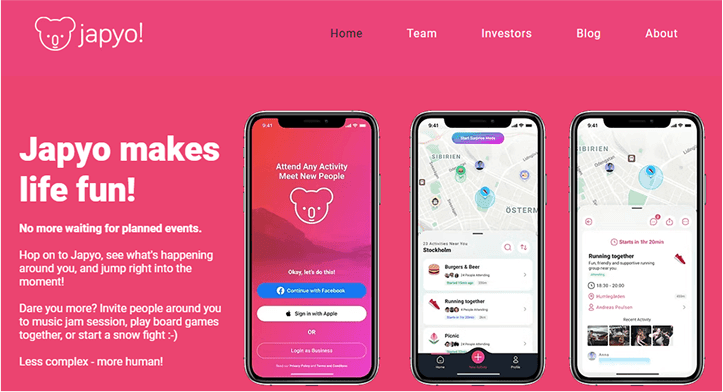
In an age where digital interactions are often filtered, curated, and driven by algorithms, Japyo sets out to redefine what it means to connect.
CI-CD
Mobile app development
InAppsMaps

Your Benefits
The way we deal with your
task and help achieve results
Our services stand out for their quality, customized
and dedication to delivering the best results.
BDD-Driven Testing
Device Cloud Testing
Automation Integration
Agile Alignment
Contact Us
Connect with us for best solutions
and success.
We enhanced speed and design for a better user experience
Schedule an appointment with us today!
Keep up with the dynamic world of IT operations,
and stay ahead with cutting-edge solution.
Emails
Location
Follow us on